Many families, enterprise owners and rural investors who intend to deploy distributed photovoltaic systems have many questions about installation conditions, cost budget, investment return, service life and later maintenance. This article sorts out the most frequently asked questions in the industry, provides professional and detailed answers, and helps users fully understand distributed PV projects and avoid investment traps, so as to make scientific and reasonable investment decisions.
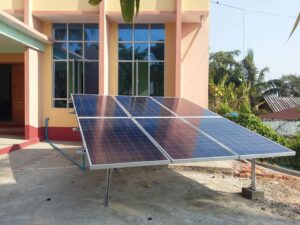
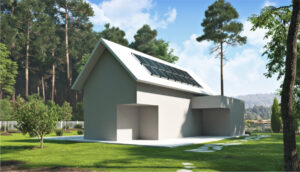
First, what are the basic installation conditions for distributed PV? The core installation condition is stable and sun-exposed building space or idle land. For residential users, cement flat roofs and tile sloped roofs are both applicable, as long as there is no long-term shelter from tall buildings and trees to ensure sufficient sunlight. For industrial and commercial users, factory and building roofs need to have stable structural bearing capacity, and professional structural inspection can be carried out before installation. Rural agricultural PV only needs idle greenhouse space and open land with flat terrain and sufficient light. In addition, the project needs to meet local grid connection standards, and professional manufacturers will complete the qualification declaration and grid connection procedures uniformly.
Second, about the installation cost and investment cycle of distributed PV. In recent years, the overall cost of distributed PV has dropped significantly. The total investment is mainly affected by installation capacity, module brand, inverter configuration and whether to match energy storage systems. Household small-scale PV systems have low total investment, simple installation and short recovery cycle. Industrial and commercial large-scale systems have higher total investment but larger daily power generation and more significant cost-saving benefits. Under normal light conditions and no energy storage configuration, the investment recovery cycle of most distributed PV projects is 3-6 years, and the system can operate stably for more than 25 years, bringing more than 20 years of pure profit income for users.
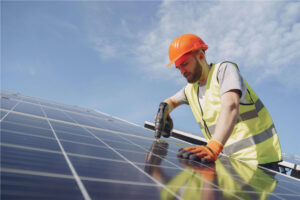
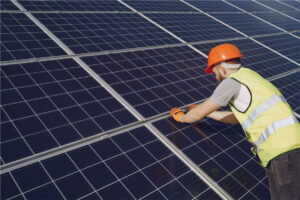
Third, daily maintenance and service life of the system. High-quality distributed PV systems have extremely low later maintenance costs. The PV modules have wear-resistant, wind-resistant, rain-proof and dust-proof properties, and do not need frequent manual maintenance. Daily maintenance only needs regular cleaning of surface dust and fallen leaves to ensure light transmission efficiency. The core equipment such as inverters has a service life of more than 10 years, and manufacturers provide long-term after-sales warranty services. The whole system has a service life of 25-30 years, with stable power generation efficiency and almost no additional operating costs in the later stage.
Fourth, about power sales and policy subsidies. Most regions support the grid connection of distributed PV systems. Users can adopt the mode of “self-generation and self-consumption, surplus power grid-connected” to obtain electricity bill savings and grid-connected power sales income. Many countries and regions have launched one-time installation subsidies, annual power generation subsidies and tax preferential policies for distributed PV projects, which can further improve investment returns. Professional PV installation teams will assist users in handling all policy declaration and grid connection procedures to ensure that users fully enjoy policy dividends and maximize investment benefits.