Agricultural distributed photovoltaic systems, represented by photovoltaic greenhouses and agricultural complementary PV projects, are an innovative composite application model that perfectly combines modern agriculture with new energy power generation. Different from single PV power generation and traditional agricultural planting, agricultural distributed PV makes full use of rural idle land and greenhouse space to build three-dimensional planting and power generation systems, realizing the dual benefits of agricultural production clean energy power generation, and effectively activating rural idle resources to drive rural economic development.
Photovoltaic greenhouse is the most mature form of agricultural distributed PV. The PV modules are installed on the top of agricultural greenhouses, which can block strong sunlight in summer to avoid crop sunburn, and transmit appropriate light for crop photosynthesis, adjusting the internal temperature and light environment of the greenhouse to create a more suitable growth environment for vegetables, fruits and seedlings. In winter, the PV panel covering can play a heat preservation effect, reduce greenhouse heat loss, extend the planting cycle of crops, and increase agricultural output. While ensuring normal agricultural planting, the top PV system continuously generates clean electricity, which can be used for greenhouse temperature control, irrigation, ventilation and other agricultural equipment power consumption, reducing agricultural production electricity costs.
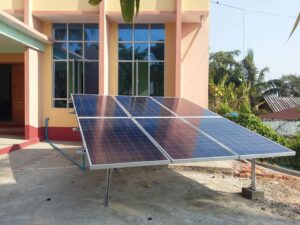
In addition to photovoltaic greenhouses, rural open-field distributed PV also adopts the mode of “power generation above, planting below”. PV supports are built at a certain height from the ground, which does not affect the normal growth of low-growing crops such as grains, vegetables and traditional Chinese medicinal materials under the panels. The reasonable spacing of PV modules ensures uniform light transmission on the ground, meeting the photosynthesis needs of crops. This three-dimensional land utilization mode completely changes the limitation that traditional PV power generation occupies land resources, realizes the intensive utilization of rural land, greatly improves land output efficiency, and creates double economic benefits for farmers.
Agricultural distributed PV also helps rural energy transformation and industrial upgrading. The self-generated photovoltaic power can meet the daily power consumption of rural families and agricultural production, reduce rural reliance on fossil energy, and realize green agricultural production. Excess power can be connected to the grid to increase farmers’ extra income, broaden rural economic growth channels, and promote rural revitalization. With the continuous promotion of rural green energy policies, agricultural distributed PV has become a key project to activate rural resources, increase farmers’ income and develop green agriculture, with broad market prospects and practical promotion value.